If you prefer to listen to this blog in the podcast, go to your favorite podcast player or visit realfoodbrands.com/podcasts
When it comes to naming companies or new products, people usually fall in two camps: it’s either an energy drain or an energy boost. I fall into the second category; I love naming new products! I also think it’s possible for those people who think naming is painful may change their tune if they just had the right structure and process in place.
You may be thinking that words like “structure” and “process” don’t exactly inspire creative brainstorming, but let me give you an example.
If you were asked to build a house for someone, but that’s all the information they gave you, it would be overwhelming. Where should you build it? How big? What’s the budget? What style does the owner want? It would be exciting, but you’d be flying blind.
Although it’s fun to have a blank page, when it comes to something as important as building a house (or in our case a brand) you need some parameters in order to make sure you deliver something that will attract and win over the homeowner.
Similarly, if you try to start naming without having some parameters, you’ll either feel overwhelmed or start brainstorming names that don’t tie to your strategy.
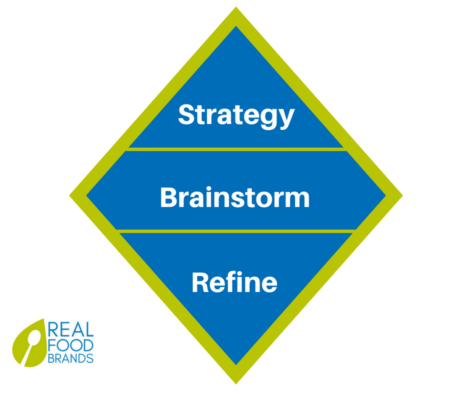
So, here are the 7 steps to naming that I use with my clients. I call it diamond mining because we start small, go broad, then narrow back in until we find that one gem at the end.
- Set decision criteria–What are the key things you want your name to represent?
This helps take some of the opinion out of naming, whether you are working alone or with your team. When you set the criteria first, it helps make sure that, in the end, you have a name that will move you closer to your goals, not just one that the highest-ranking person in the room likes the most.
- Review brand strategy and pull out key concepts that are pivotal to who your brand is at the core.
These concepts come from your brand strategy—this could be things like product attributes, functional benefits, emotional benefits, your physical location, something related to the category as a whole, and so on. Think of this as the top of a diamond shape, where we start narrow.
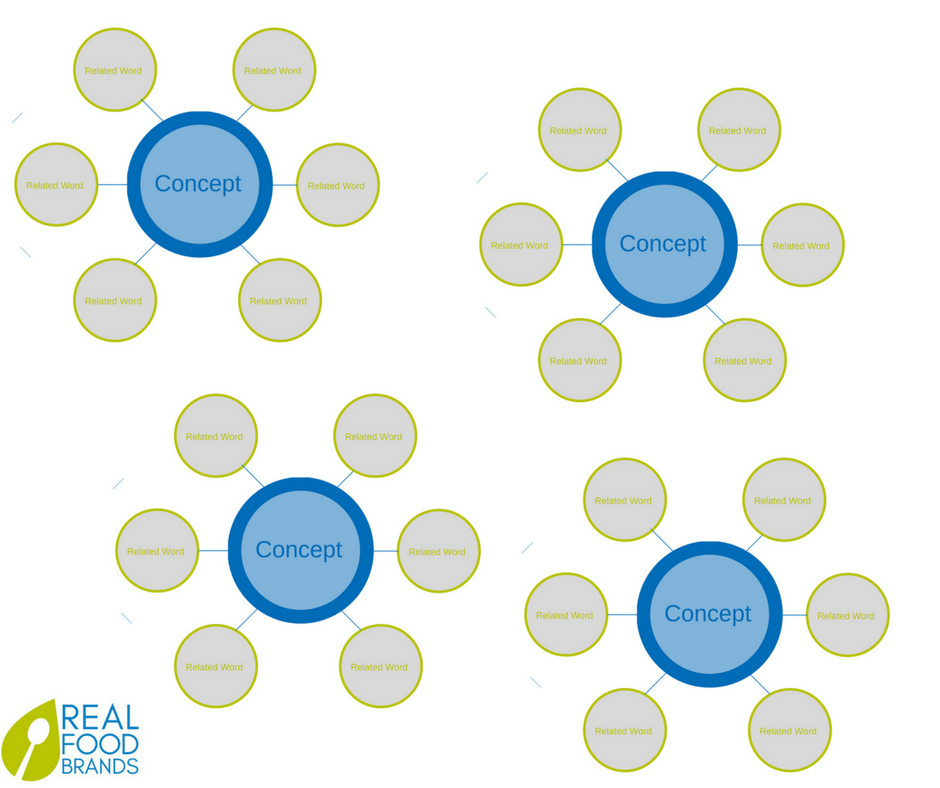
- Create circles on your page for about 5 of the key concepts
Now we get started on the brainstorming part. This is where we go broader with our brainstorming.
- Start by writing down words you pulled from your brand strategy and circle them.
- Now, do a free association of other words that come up related to that core word. Write these words around the circle and draw a circle around each of them with a line connecting to the original word.
(pro tip: Don’t filter yourself at this point, and you’ll definitely want to have a thesaurus handy!)
So, for example, if part of my brand strategy is about the proud heritage of where my product comes from and my location is at the center of one of the circles, I would brainstorm things like the name of my city, the year my state became a state, area landmarks, the type of heritage ingredients that may be in the product…
Or, if the cocoa I use is rare and unique, I could brainstorm around things related to the benefit, whether taste, health or a combination of things that that ingredient offers and later pair it with another word that creates a full product name.
- Review your clusters and narrow.
When you’re brainstorming it’s normal to have some clusters that look full and others that have hardly any circles coming out from them because you just didn’t have much energy behind that idea.
Where did you have the most energy? We’re going to keep working on those. If any felt like they drained your energy and aren’t worth pursuing further, put a line through them.
- Start to think about actual company or product names.
Now take out a new piece of paper or whatever digital tool you like to use to capture your ideas. You don’t want to throw out the concept clusters that you didn’t want to pursue (keep them for reference just in case), but we want them out of sight so you can focus on the names that created the most excitement.
You can put two words together to help come up with some interesting combinations.
While clarity needs to trump creativity in most cases, you can think about things like adding a prefix or suffix, creating a compound word or turning your idea into a verb to be more action-oriented if it fits your brand positioning.
- Competitive search
This does NOT replace a legal search through your attorney, but I like to Google the name and look at the first three pages, at least. I also suggest looking at the USPTO.gov website to do a free search of the trademark database to see if there are any current trademarks out there.
If there seems to be a conflict, is there a way you can put a twist on the name you like, or is it squarely in your competitive set?
I always suggest buying a URL and reserving the social media pages for a name you are pursuing once you are serious about it. For a low investment you can be sure someone else doesn’t snag your real estate while you finalize plans!
- Get honest feedback.
It’s always smart to get feedback, but get it from your ideal audience. If your coworker, business buddy, or sister isn’t either your ideal customer, willing to listen to you explain who your ideal customer is, AND willing to share concerns as well as praise, then
they aren’t in a good position to give you actionable feedback. It’s natural to want to share your ideas with people you know and trust, but recognize the need to give them context and look for trends in what they say. But take it as input, not law.
There are online tools you can use for concept testing and naming testing. I’m not going to recommend any in particular because it really depends on your objective and your budget, but if you do a quick search for “online concept testing” or “online naming testing” you will have a lot of options.
What is the meaning behind your company name? I’d love to hear! Email me at Katie@realfoodbrands.com.
 Katie has 15+ years of experience in brand management and marketing across a range of popular brands from Fortune 500 consumer package goods companies to local startups. She has degrees in Marketing & Management from the University of Wisconsin – Madison School of Business and now, as an independent consultant, she is dedicated to helping local and natural food brands become category leaders in both philosophy and growth.