Getting started with your food startup, or scaling to the next level can be exciting. You get to share something you love with new people, and (at some point) make some money for your efforts. As you start making moves to make your passion into your career, however, you’ll run into some problems if you don’t have a clear idea of who you’re marketing to and how you want to grow.
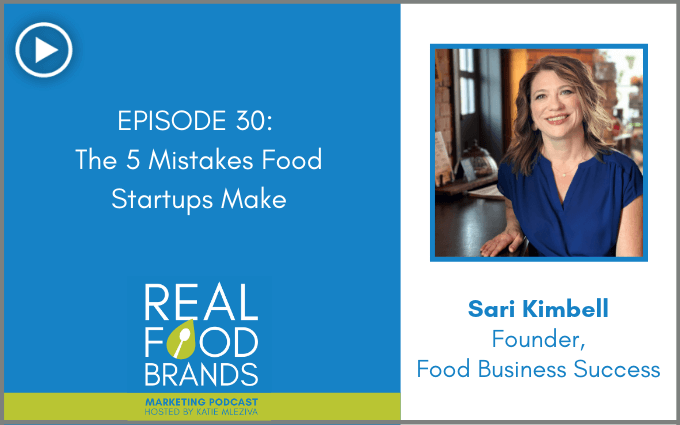
Today on the Real Food Brands Podcast, host Katie Mleziva has a conversation with Sari Kimbell, Founder of Sari Kimbell Consulting and creator of Food Business Success, a consulting agency that helps food startups plan for growth. She shares with us the 5 mistakes she sees food startups make, and how to avoid them.
1. Not Loving the Product
You have to believe in your brand to fuel it. As Sari says, “If you don’t have a real passion for it, that is going to be really hard to sustain yourself while you grind it out in the first year.” Most food entrepreneurs she works with start with very little capital but very big hearts. “You’re going to face obstacle after obstacle and people not believing in you,” she says, “so you have to be the number one person that is believing in your business.”
2. Not Pricing Correctly From the Start
Even if you’re turning a profit at the farmer’s market, that doesn’t necessarily mean that you’re operating at the kind of margins you need to expand to sell regionally, on Amazon, or nationally. You need to understand your Cost of Goods Sold (COGS) and build in margins for retail and online sales. The distribution channel, whether it’s your local Co-op or Amazon, gets a cut and you need to build that into your price so you’re not giving your customers pricing whiplash.
COGS incorporates four things: the ingredients needed to make the product, your packaging, your labor and active time to make the product, and your active labor to package it. Many entrepreneurs don’t account for labor, which makes sense early in the process when you’re doing it all yourself but can cause big problems later on when you’re looking to scale.
3. Not Having a Plan to Grow Sales
As Sari puts it, “First you have to know: what is your goal? Do you only want to be in farmer’s markets? Do you want to focus on e-commerce? Do you want to be in regional stores around your state? Do you want to be a national brand?” Make a one-year plan and, ideally, a three-year plan so you can do the right things at the beginning to set you up for that success. You need to think about the food business as a staircase, where each new step up requires new capital commitments.
4. Not Defining the Brand From the Start
You Brand Strategy — reviewing your competition, identifying your ideal customers and articulating what makes your brand unique — should be the first thing you do, not the last. Sari has worked with so many food startups that want to be everything to everybody, but that just doesn’t work. How will you know what to say if you don’t know who you’re trying to talk to? Know who your ideal customer is so you go to the right events, use the right words in your communications, and design your packing the right way. Defining your brand strategy early on will set the stage, or “north star,” for consistency in everything you do in your business.
5. Not Getting Help
When you’re going it alone and bootstrapping it, it can be easy to look up and suddenly find yourself in a rut. A lot of times, Sari meets people when they’re in a stage she calls “grow or close.” They’ve been making a go of it on their own for a couple of years and they’re starting to get exhausted, which starts to take its toll on the passion they started out with. That’s where it may be time to bring in an expert.
Use industry groups to network with other food business entrepreneurs as well as people who provide services to build a system of support and resources. Your local Small Business Development Centers (SBDC) office can often help you with your business plan. There are so many resources out there, including our own the Real Food Brands Marketing Round Table Facebook group where you can connect with Katie, Sari, and more folks to get help and share your successes.
Join us for more in-depth information on how to avoid these common mistakes that food startups make, and don’t forget to subscribe on your favorite podcast player so you never miss an episode.
Now, let’s go shake up shopping carts!
In This Episode:
- Sari’s path to becoming a food startup consultant.
- Why bootstrapping may be necessary, but can cause problems down the road.
- The reason belief in your product is so important when you’re starting out.
- Why pricing correctly from the beginning is so important.
- How to factor in the Cost of Goods Sold (COGS).
- The hidden costs selling on Amazon.
- Why it’s so important to develop a clear plan for growth.
- Why you want to define your brand strategy from the start.
- Where to reach out for help.
Quotes:
“If you aren’t from the food industry, if you don’t really understand how it works, then you can really get yourself into trouble with pricing down the road.” – @foodbizsuccess
“First you have to know: what is your goal? Do you just want to be in farmer’s markets? Do you want to focus on e-commerce? Do you want to be in regional stores around your state? Do you want to be a national brand?” – @foodbizsuccess
“It’s not going to help you to spend your resources wisely if you’re trying to be everything to everyone.” – @foodbizsuccess
“My goal is to have a big impact on our food system and so I want as many people succeeding at their entrepreneurship dreams as possible.” – @foodbizsuccess
Resources:
- Sari Kimbell – Food Business Consulting
- Food Business Success
- Why a Clear Brand Strategy Matters When Seeking Financing With Tera Johnson
- The Food Business Success Facebook Group
- Real Food Brands Marketing Roundtable Facebook Group
- Real Food Brands website (download your Brand Checkup Scorecard here)