Having one integrated marketing plan, versus a more ad hoc and piecemeal approach, helps make sure that all of your efforts are consistent, coordinated and focused on creating a purchase cycle that eventually turns your customers into brand advocates. Between the visuals and the brand story that you’re telling, your content is your chance to draw people in, build trust, and have a genuine conversation with your customers.
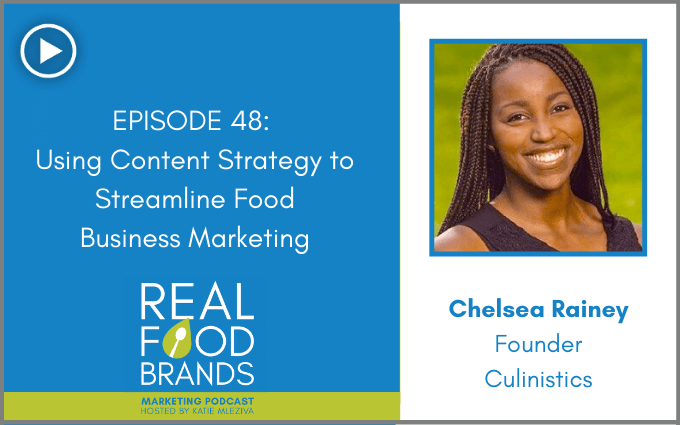
Today on the Real Food Brands Podcast, host and Brand Strategist Katie Mleziva talks with Chelsea Rainey, the Founder of Culinistics, which helps aspiring food and beverage entrepreneurs create a powerful brand story, focus their brand strategy, target their ideal customer, and showcase their signature offer through mindset coaching and research-based creative design. In this episode, we talk about how to develop your content strategy, maintain consistency across channels, and avoid burnout.
The Backbone of Content Strategy
“I’ve been loving food and doing everything with food business since the age of five, selling brownies at my mom’s garage sales,” Chelsea says. She ran a catering company to help put herself through college and eventually got into the corporate world working with manufacturing companies that provide ingredients for household brands and consumer packaged goods. Eventually, she launched her consulting agency, Culinistics, to help people who want to launch their own food brands do that with confidence.
One of the key ways that Chelsea helps food entrepreneurs and brand owners is by helping them develop a comprehensive content strategy. “Content is something that you’re putting out there, and strategy is how you’re going to do it,” she says, “so essentially, your content strategy for your brand is your game plan on how you intend to educate, to engage with, and to evoke connections with your ideal customer.” These three pieces make up the backbone of a content strategy:
- Educate: An introduction to let your customers know what your brand is and what you have to offer.
- Engage: Using your brand persona to entice your customers, whether that’s in copywriting, design, your social media presence, etc.
- Evoke: Communicate your core values, what your brand stands for outside of your sales offer, to create a lasting connection with your customers by giving them something they want to resonate with or support.
Questions You Need to Ask to Develop Your Content Strategy
“One of the ways that you can maintain consistency, whether it’s online or offline values, is making sure that you have your core values,” Chelsea says. She thinks about it in terms of three pillars you want to make sure you maintain no matter what. Chelsea’s three pillars are authenticity, education, and inspiration. “No matter what I’m putting out, whether it’s for my personal brand or my consulting agency brand, those pieces of content are going to fall under one of those three areas,” she says.
“If you’re putting out content just for the heck of it, you’re missing out on a lot of opportunities to grow your brand and make a profit,” Chelsea says. The key thing to understand is that creating content and strategizing your content are two different things. While your strategy includes content creation, you need to be developing it with a specific purpose in mind. To go develop your content strategy, Chelsea walks her clients through these questions:
- What is the purpose of your content strategy? Are you looking to grow, are you looking to sell, or are you looking to share?
- Which of your core values is that content strategy going to highlight?
- What platform are you going to use and how frequently are you going to maintain the content on that platform?
- How are you targeting your ideal customer? What keywords or other language do you need to be using?
- How does your sales funnel or process funnel work for this content? Once they consume the content, what are the next steps so they can engage with your brand?
- How are you going to measure your success? What Key Performance Indicators (KPIs) are you going to look at to see if your content strategy is working?
There are a lot more great tidbits here about how to avoid burnout, when it’s a good time to rerun successful campaigns, and how to manage all the different channels available to you, so be sure to listen in to the full episode.
Now, let’s go shake up shopping carts!
In This Episode:
- The key pieces that should make up the backbone of your content strategy.
- How to maintain consistency across online and offline content.
- How using the three pillars approach can help keep your content consistent.
- The difference between creating content and strategizing content.
- How to develop content with a specific purpose in mind.
- The questions Chelsea walks her clients through to develop a content strategy.
Quotes:
“Your content strategy for your brand is your game plan on how you intend to educate, to engage with, and to evoke connections with your ideal customer.” – @Culinistics
“No matter what I’m putting out, whether it’s for my personal brand or my consulting agency brand, those pieces of content are going to fall under one of my three brand pillars to maintain consistency.” – @Culinistics
“If you’re putting out content just for the heck of it, you’re missing out on a lot of opportunities to grow your brand and make a profit.” – @Culinistics
“When you’re running a brand, whether you’re a solopreneur or a corporation, you always have to have consistency because consistency builds trust.” – @Culinistics
Resources: