While optimism can get us far in the natural food business, you also need to spend some time thinking about what could go wrong. Planning for the worst-case scenario means that you can more confidently move forward with a positive outlook, knowing that you won’t get blindsided if things don’t go as planned. No matter what phase of business you’re in, it’s worth it to invest time to think ahead to what could go wrong. This could be applied to any area of your business (e.g. new product launch, distribution issues, supplier shortages, etc) but our focus here is on PR crisis planning.
Today on the Real Food Brands Podcast, host and Brand Strategist Katie Mleziva talks with Jeff Hahn, Owner and Head of Strategy for Apron Food PR. His new book, Breaking Bad News, which launches soon, teaches you how to communicate with your audience and customers about any crisis.
Preparing for a PR Crisis
“I grew up on a farm in Iowa—I always thought that I was going to be a farmer,” Jeff says. But when, in 1973, a tornado destroyed his family farm, he ended up on a completely different career path in PR. “But food and the production of it, the feeding of people, have always been a part of my heritage,” he says, “something that I’ve always gravitated back to.” Since then, he’s been looking for ways to marry the two.
One of the main ways that Jeff does this is by helping food businesses create and document a crisis response plan. It’s something that not all food brands are thinking about, but Jeff’s elevator pitch for why you should worry about it is simple. “Your brand and products have just been assigned a class one recall by the USDA. What do you say, who’s going to say it, and how do you say it in order to protect your brand?”
To help, Jeff has developed a five-step process for crisis response planning and communications.
The Reputation Dissonance Model
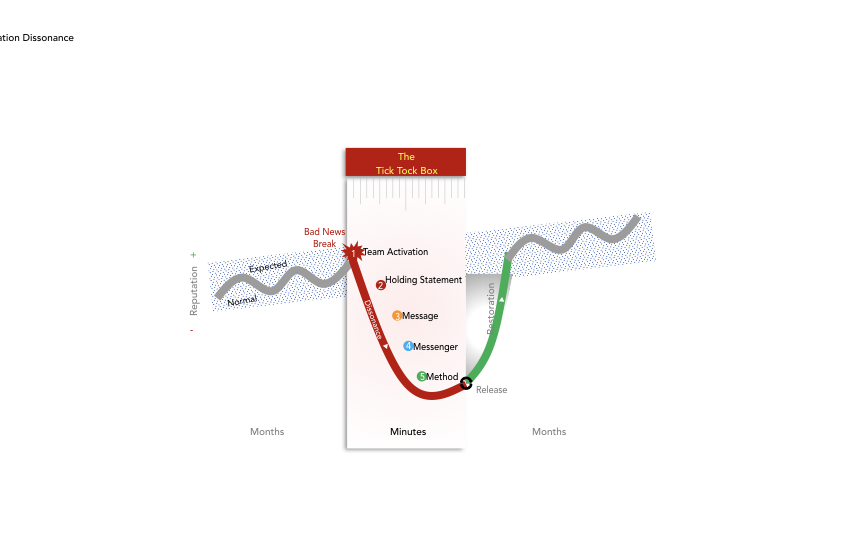
Jeff has created a Reputation Dissonance Model, a “model of models,” to explain how the crisis response process works. “The spaghetti has hit the fan,” Jeff says, “and we’ve got to move and answer critical questions in order to control the narrative about our product or brand in the media or to our audiences.” What the model attempts to answer is explain what the sequence of decisions you need to make in order to create that control over time.
1. Team Activation: Assemble a Rapid Response Team
There are many names for a rapid response team: crisis management team, crisis comm team, crisis team, incident team, issues team, etc. The goal is the same: to respond quickly. The thing that many brands overlook is that assembling the team itself is a tricky task in and of itself. Everyone on the team needs to know where to call in and when, especially in a world where a crisis can happen at any time (and it’s probably not at 9 a.m. on a Monday). As Jeff puts it, “You have fifteen minutes to get all of the decision-makers required around the table or on the phone to work through the other decisions that are about to come.”
2. Holding Statement: Communicate to Stakeholders
Even as the clock is ticking for your organization’s response, other people may know about the crisis. Depending on the severity of the situation, that may include anything from getting back to the USDA to responding to images and posts on social media. Your organization needs to issue a holding statement to your stakeholders to explain that you understand the situation and you’re working on a solution. This gives you more time to collect information and think through what you need to do next.
3. Message: What Are You Going to Say?
“The average length of a sound byte in today’s media is 8.95 seconds,” Jeff says, “what that means for your message is it has to be short, concise, and allow people to get their arms around your position vis-à-vis this particular problem.” The key decision here is whether you’re going to accept blame or reject it, and there are a variety of specific tactics you can take for each.
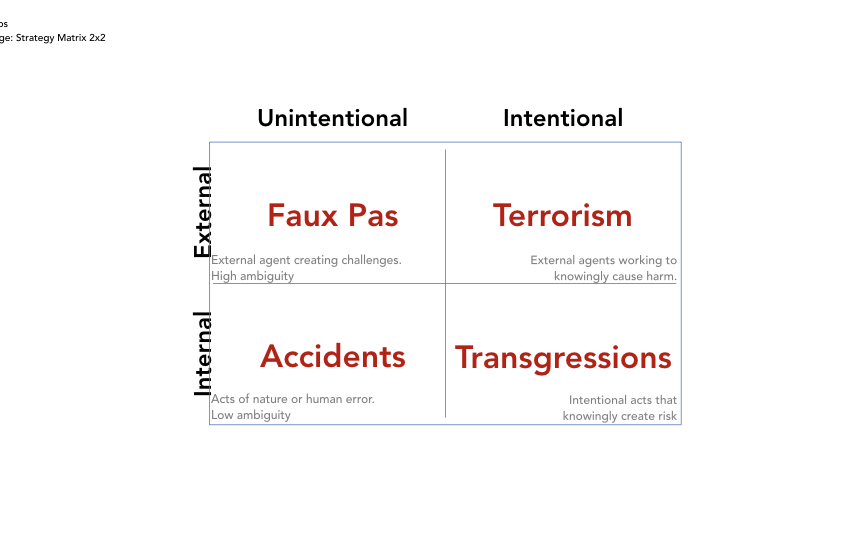
This messaging message was created by Dr. Timothy Coombs at Texas A&M. Basically, is the source of the issue external or internal, and is the incident intentional or unintentional? Thinking through this helps you get a better handle on how you should respond.
4. Messenger: Who’s Going to Say It?
“Messengers have a really important role: they both have to protect the brand and empathize with those who may have been affected,” Jeff says, “this requires a real balancing act, emotionally.” This requires a lot of training and preparation, especially in a “hot mic” situation but even on social media. One thing that can help is looking at other similar situations to get a better understanding of what questions to expect, letting you think through your responses.
5. Method of Delivery: How Are You Going to Get the Word Out?
After you’ve crafted your message and figured out who is best to say it, you need to figure out how to get people to pay attention. This is going to change depending on the situation, and Jeff lists ten different methods in the book Breaking Bad News. The balance here is between the level of control you’re after (issuing a statement), versus the level of authenticity that your stakeholders expect (participating in a press conference).
Listen to the episode to get all the details so you can plan ahead. Let’s continue the conversation over in the Real Food Brands Marketing Round Table Facebook group.
Now, let’s go shake up shopping carts!
In This Episode:
- Why everyone needs a crisis communications plan.
- Jeff’s five-step framework for developing a food PR crisis communications strategy.
- Why getting the right people together in a food PR crisis is often the trickiest part.
- How to issue a holding statement to buy yourself time.
- A framework for figuring out the right message to say.
- The balance your spokesperson needs to strike.
- How to choose the right method of delivery for the job.
Quotes:
“Your brand and products have just been assigned a class one recall by the USDA. What do you say, who’s going to say it, and how do you say it in order to protect your brand?” – @ApronFoodPR
“We’ve got to move and answer critical questions in order to control the narrative about our product or brand in the media or to our audiences.” – @ApronFoodPR
“You have fifteen minutes to get all of the decision-makers required around the table or on the phone to work through the other decisions that are about to come.” – @ApronFoodPR
“Brands take months and years to build up their equity and who they are, what they’re all about, but it only takes a few minutes to destroy so you have to move quickly.” – @ApronFoodPR
Resources: