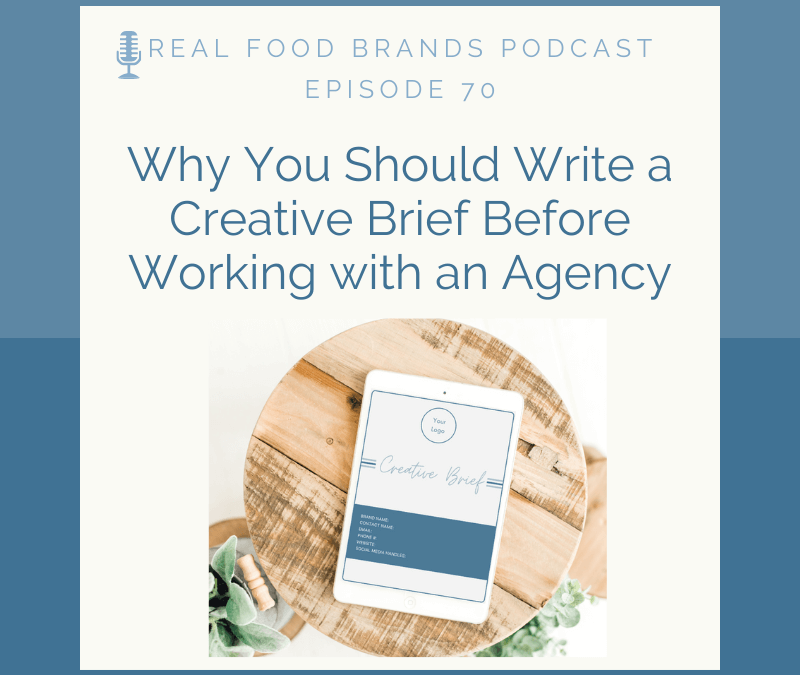
Collaborating with a marketing agency can do a lot of good things for your brand, but you need to do some homework to make sure you find the right partner for your business, and then align them with your brand strategy. What you need is a creative brief, something that helps your potential partners know what you’re looking for and how they can knock it out of the park for you.
On this episode of the Real Food Brands Marketing Podcast, host and Food & Beverage Brand Strategist Katie Mleziva walks you through how to write a good creative brief. She also created a free creative brief template you can download to get started.
What Is a Creative Brief?
A creative brief should be just that—thorough enough to inform and inspire, yet brief. We’re not looking to describe every milestone and history of your brand, or prescribe every single little thing about your marketing strategy. After all, you’re working with a marketing partner because they’re the experts, so giving them too many constraints or being too prescriptive won’t help them do their best work.
Instead, lay out what your business goals are, who your ideal audience is, and be organized about logistics and execution. Share any insights or research you have about what influences your audience and why. What’s your unique offer? What sets you apart? The creative brief template Katie shares as a download includes exactly what to include in your brief to optimize conversations and maximize results.
Tips from 3 Marketing Experts
Katie also surveyed marketing experts in her network to find out what they wished brands knew before they started working together. Here’s what they had to say:
“The biggest thing I wish clients/prospects brought to the party was clarity on their business goals. So many times, clients have vague aspirations or some sort of vanity metric they’re chasing. Although we can help talk it through—having concrete goals / objectives at the onset removes ambiguity for everyone involved, and gives us a ‘true north.’” – Rajat Kapur, Managing Director at &Marketing
“Knowing who they want to target is key. Many times, clients come to an agency with a half-baked idea and some demographics. A clear profile that a good agency can refine and develop a story around is a huge help. The other question we ask is what does success look like? How are they being evaluated by the company as a whole? Our job as an agency is to ensure they achieve success.” – Jessica Hughes, Owner & Managing Director at Viscul, Proprietor at Calicutts Spice Co. and Host at The Fork & Lens Podcast
“While I can’t speak to general marketing agencies, I do have some insight for working with Amazon agencies which is part of a holistic brand strategy:
- Have high-resolution primary product photos
- Have your logo in EPS or a high-resolution JPG
- Have Product SKU’s and GS1 UPC’s Organized (including for multipacks)
- Have product weights/dimensions
- Have ingredients in CSV/Excel format
- Have lifestyle photos / mood shots
- Have videos (if available) able to edit
- Creative brief w/mood boards, colors, etc
- Product features, benefits, and certifications
- Keywords customers use to find your product
A lot of it is just having all of your logistics organized and ducks in a row. You need to have a clear concept of your brand, your target audience, your message and your voice as all of that is critical for an agency to help execute a successful strategy.” – Shannon Roddy, Amazon Strategy Consultant and creator of the Marketplace Sellers Course
So work through the creative brief worksheet, and if you need help, Katie’s new on demand course, Brand Strategy Fundamentals WorkshopTM is the place to start. You’ll get a video series with her step-by-step process, along with a workbook and a private online community hosted by Katie to help you actually get the work done. This is a workshop after all, and we’re looking forward to getting started with you to set your brand apart!
Visit realfoodbrands.com/workshop to get started.
If you have any questions, don’t hesitate to reach out at katie@realfoodbrands.com.
Now, let’s go shake up shopping carts!
In This Episode:
- What every agency relationship needs for a successful collaboration
- How to write a great creative brief
- Where many brands go wrong when they work with a marketing agency
- How to write a brief that doesn’t handcuff an agency’s creativity
- An overview of what to include in a creative brief
- The difference between observation and insights
- The advice three marketers have for brands working with a new agency
Quotes:
“Take your brand from permissible to possibilities.” – Katie Mleziva
“We never want creative people to feel boxed in, but they do appreciate some sort of guidance to know what hitting it out of the ballpark looks like.” – Katie Mleziva
“Having your creative brief in place will help you save time and get the optimal outcome you’re looking for with your agency partner. The great thing about the brief is that it really sets the tone to create and explore. It allows the team to break apart from the norms and look beyond the function to actual insights.” – Katie Mleziva
“If you write a ho-hum brief just to check the box, what kind of work do you think you’re going to get back? But if you think big and show the team this is something to really get excited about, you’ll get different results.” – Katie Mleziva
“The reason I like to suggest you all write these (briefs) right up front is that it will help you prepare and give you the confidence and be concise and have those insights outlined so even in initial conversations you can tell if it’s the right partner for you, or not.” – Katie Mleziva
Resources: