People need to be aware of your food brand if it’s going to get from the shelf into their shopping carts. But how do you get people talking about your brand?
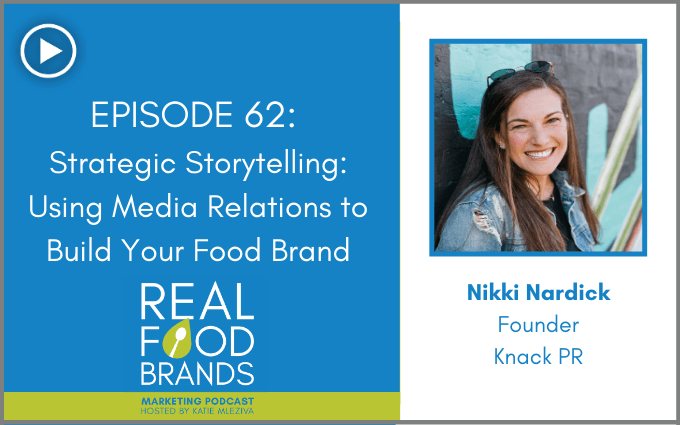
Today on the Real Food Brands Marketing Podcast, host and Food & Bev Brand Strategist Katie Mleziva sits down with Nikki Nardick, Founder of Knack PR, to discuss how to connect with media outlets to get press coverage for your food brand – and what to do with that attention once you get it.
When to Use PR for Your Food Business
“Deep down at my core I’m a snack nerd,” Nikki says, “I love working with early-stage food and beverage brands that could be the next hot thing on the shelf.” As the founder of Knack PR, Nikki specializes in media relations—securing press coverage for brands by reaching out to editors, reporters, producers, bloggers, and more. “To me, PR is strategic storytelling,” she says.
Public Relations (PR), also known as media relations, is used in a few different key ways: for announcements (like coming to a new region or developing new flavors), for differentiating yourself from the competitive landscape, and educating your target audience on what makes your brand unique. At the end of the day, you’re trying to generate that key word-of-mouth buzz that helps you increase says, get investor attention, and find new distribution deals.
When Should You Start Thinking About PR and Building Relationships with the Media?
Nikki shares three key areas of your business to review as you ask yourself to know if you’re ready to reach out to media outlets to promote your brand.
- Packaging – Are you happy with your packaging so your audience will recognize your brand on shelves?
- Taste – Are you confident in your product’s taste?
- Operations – Are your logistics in place to fulfill the orders and traffic that can come with a great press story?
A good rule of thumb is to assume customers will remember you for about a week after they come across you in media, so make sure you’re in a position to capitalize on any media attention from your efforts.
When Do You Need to Write a Press Release?
“The key way to know when to write up a press release is to know when you have news,” Nikki says. A new flavor launch, distribution expansion, a new C-level hire, an award win, a new fundraising round, things of that level are worthy of a press release. “You don’t want to be churning out a new press release every week or you’ll become the girl who cries wolf, and people will stop trying to pick them up,” she says.
A pitch email is another way to reach out to media that doesn’t have the same formality as a press release. “To get strong media attention, you’re better off forming relationships with the press through targeted email pitches,” Nikki says, because you can reference specific articles someone has written and how your brand fits in the picture. “When you reach out, make sure you understand what that person’s role is and how you can help them in terms of getting good content,” Katie says.
How to Get Started with PR
“Step one is knowing your goals,” Nikki says, “are you trying to attract investor attention? Are you trying to get the attention of buyers? Are you trying to reach your target consumer? That really makes a difference with which publications we reach out to.” You need to understand where they get their recommendations. For a specific audience like vegan or gluten-free, there’s a whole network of bloggers and specialty journalists who should be on your radar. In contrast, buyers are looking at places like Nosh or Food Navigator, with smaller but more engaged readerships.
There are a lot of great tidbits for large and small food brands in this episode, so make sure to listen to the full episode. One key thing to keep in mind is that with PR, you’re always building relationships. That’s why it’s called media relations! “PR is a great way to build trust,” Nikki says, “and that’s why it’s so important to leverage.” If you get a great writeup, don’t be afraid to tell the world about it or even promote it with an ad buy. Ultimately, you need to build relationships, and that means helping people follow your journey every step of the way. “Set aside some product for press samples and mail it out generously,” she says, “it’s such an awesome way to stay top of mind for press opportunities in the food and beverage space.”
If you need some help, Nikki is in our Marketing Roundtable Facebook group, so reach out there with any questions.
Now, let’s go shake up shopping carts!
In This Episode:
- What media relations looks like for food companies.
- Why you don’t always need to be churning out press releases.
- How your food business goals should impact your PR efforts.
- How to know when you’re ready to reach out to press through PR.
- The difference between a press release and an email pitch.
- What strategic storytelling looks like.
- How to leverage the press coverage you’ve earned.
- What to look for in a PR agency.
- Why you should Google yourself and/or your brand name every morning.
- The power of product samples in staying top of mind with your partners in the press.
Quotes:
“Deep down at my core I’m a snack nerd. I love working with early-stage food and beverage brands that could be the next hot thing on the shelf.” – Nikki Nardick
“Step one is knowing your goals: are you trying to attract investor attention? Are you trying to get the attention of buyers? Are you trying to reach your target consumer? That really makes a difference with which publications we reach out to.” – Nikki Nardick
“When you reach out to press, make sure you understand what that person’s role is and how you can help them in terms of getting good content.” – Katie Mleziva
“Set aside some product for press samples and mail it out generously. “It’s such an awesome way to stay top of mind for press opportunities in the food and beverage space.” – Nikki Nardick
Resources:
- Ep #7: Package Design that Pops Off the Shelf
- Ep #50: Creating a Beverage Brand That Stops People in Their Tracks
- Ep #53: Using Influencer Marketing to Grow Your Food Brand with Elexis Schroder
- Knack PR
- @knack_pr on Instagram
- Connect with Katie on LinkedIn
- Real Food Brands Brand Checkup Scorecard
- Real Food Brands Marketing Roundtable Facebook Group
- Real Food Brands website